|
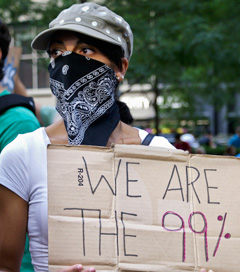
| NYPD beats Occupy protester with fist in Zuccotti Park, 11/15/11. (photo: AP/SA) |
26 September 12
 he
presence of NYPD TARU (Technical Assistance Response Unit) officers at
Occupy protests has long been a source of contention among occupiers and
legal observers. The precise role and remit of the camera-wielding
officers is ill-defined; the end product of their constant filming
usually goes unseen by those featured in it.
he
presence of NYPD TARU (Technical Assistance Response Unit) officers at
Occupy protests has long been a source of contention among occupiers and
legal observers. The precise role and remit of the camera-wielding
officers is ill-defined; the end product of their constant filming
usually goes unseen by those featured in it.
However, on Sunday a group claiming Anonymous
affiliation released 60 hours of TARU footage from the night of the
Zuccotti Park eviction on Nov. 15. The footage is considered
particularly relevant in fleshing out the NYPD versus Occupy narrative,
since both mainstream and citizen journalists and videographers were
forcibly kept away from the park as officers dismantled the encampment
and rounded up protesters that night.
A release introducing the footage dump notes, “The
NYPD denied freedom of the press the night of the Zuccotti raid by
kicking out media and keeping them two blocks away … Much of the video
being released is edited by the NYPD, and at times edits are quite
blatant, probably trying to cover up their brutality.”
The release urges that readers share the TARU footage
and take note of any glitches or time stamp changes, which might suggest
selective editing. “We ask for an unedited version of the tapes,” it
notes.